Software that runs your operations smoothly, connects you more closely with parents, and affords you more time with the children.
Manage your entire school with one system seamlessly
Predict, manage, track, and boost enquiries and attendances
For parents to tune into your child’s day, anywhere, anytime
Assess and evaluate your staff's performance on one platform
Choosing the right software isn’t easy. But LittleLives isn’t just software, we put your unique needs to the forefront.
There are many alternative software options available, but LittleLives stands out
From single centre to national chains. See how LittleLives is already helping schools of all sizes
LittleLives enables better schools, better teachers, better parents, and most importantly, better students
It's not about the children's learning. Get our resources for yourself, staff, and parents - all for free.
LittleVoices, Big Ideas Partnering with industry experts, we deliver curated content, insights for educators and parents, inspiring growth and connection.
Ultimate Learning Hub: Training Courses, Podcasts, Ebooks, and More! Discover a world of knowledge with our curated videos, podcasts, ebooks, and training courses
Connect Globally Through Events, Conferences, and Communities! Engage with diverse communities, local events, and global conferences, fostering connections and building lasting relationships worldwide.



How Automation Can Reduce Workload and Improve Accuracy
For many finance administrators in education, the day-to-day reality isn’t strategy - it’s volume. Chasing payments, generating invoices, reconciling transactions, handling exceptions, preparing reports… and then doing it all over again the next month.
As schools grow, these processes don’t just scale - they compound. What used to be manageable becomes fragmented, manual, and increasingly error-prone. This is where the right system makes a difference - not by adding more tools, but by removing repetitive work through automation.
Moving Away from Manual Finance Operations
Many schools today still rely on a mix of spreadsheets, manual tracking, and disconnected systems. This often leads to: repeated data entry, inconsistent billing, inaccurate subsidy tallying, incorrect submissions, time-consuming reconciliation, and even delayed visibility into financial performance.
Instead of focusing on higher-value work, finance teams spend most of their time just keeping things running. A well-designed student management system like LittleLives’ changes that by automating core finance workflows end-to-end.
From our experience working with schools and education operators, strong systems like ours tend to solve a few key problems really well.
- Billing Should Be Automated, Not Managed Manually
Monthly invoicing shouldn’t feel like a recurring project. A robust system should allow you to:
- Automatically generate invoices based on configurable fees, subsidies, and discounts
- Handle different student profiles across centres without manual adjustments
- Issue receipts instantly once payment is made
This not only saves time, but also reduces the risk of inconsistencies that often come with manual processes.
- Payment Collection Should Be Frictionless
One of the biggest hidden inefficiencies is in how payments are collected and tracked. Finance teams often juggle: multiple payment channels, manual tracking, and follow-ups for overdue payments. A well-designed system simplifies this by:
- Supporting multiple payment methods (e.g., PayNow, GIRO, cards)
- Automatically reconciling payments
- Sending reminders without manual intervention
The result? Faster collections, fewer follow-ups, and clearer visibility.
- Compliance and Subsidy Tracking Should Be Built-In
Especially in regulated environments, compliance isn’t optional - it’s constant.
Finance teams need to ensure: accurate subsidy tracking, clear audit trails, and proper classification of funds.
For example, being able to automatically distinguish between different funding sources (such as government-supported accounts vs. private payments) can significantly reduce reconciliation effort and errors during audits.
- Exceptions Should Be Easy to Handle (Not a Nightmare)
In reality, finance isn’t just about standard flows; it’s about handling edge cases such as overpayments, deposits, refunds, and/or credit balances; and knowing exactly how to resolve them. A good system doesn’t just process payments - it manages exceptions gracefully, with:
- Clear approval workflows
- Credit offsets for outstanding invoices
- Structured refund processes
This is where many systems fall short, and where finance teams end up doing manual work again.
- Reporting Should Be Instant and Actionable
At any point in time, finance leaders should be able to answer key questions such as: What’s our revenue this month? What’s outstanding? How are subsidies being applied? Which center is spending the most? Where are we underperforming?
All this should be achievable without pulling data from multiple sources, or creating yet another pivot table.
Strong systems provide:
- Real-time financial reporting
- Clear breakdowns across centres and students
- Export-ready data for finance systems
This reduces dependency on manual reporting and speeds up decision-making.
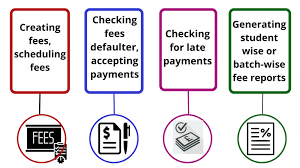
Choosing the right software isn’t just a technical decision - it’s a financial one. When the right systems are in place, finance teams spend less time chasing payments, fixing errors, and reconciling data. And more time planning, optimizing, and supporting growth. That’s the shift - from operational burden to strategic partner.
Because ultimately, the right system shouldn’t just support finance—it should enable finance to operate at a higher level.
If you’re currently evaluating systems or rethinking your setup, it may be worth exploring tools that are designed with finance workflows at the core, not as an afterthought.
👉 See how LittleLives helps schools streamline finance operations




 Singapore
 Malaysia
 Vietnam
 Indonesia
