一款帮助您顺畅运营、加强与家长联系,并腾出更多时间陪伴孩子的软件。
一个系统轻松管理整个学校。
预测、管理、跟踪,并提升咨询和出勤率。
让家长随时随地了解孩子的一天。
在一个平台上评估和考核员工表现。
选择合适的软件并不容易。但 LittleLives 不仅仅是软件,我们优先考虑您的独特需求。
这不仅仅关乎孩子的学习。获取我们为您、员工和家长提供的资源——完全免费。
我们与行业专家合作,为教育工作者和家长提供精心策划的内容和见解,激发他们的成长和关系。
终极学习中心:培训课程、播客、电子书等等! 通过我们精心策划的视频、播客、电子书和培训课程,探索知识世界
ECDA 与参与的中心合作,设计社区服务项目
通过活动、会议和社区进行全球联系! 参与不同社区、当地活动和全球会议,在全球范围内促进联系并建立持久关系。



Using an app to make health instructions foolproof
For many parents, dropping their child off at school comes with a mental checklist:
- Did I pack everything they need?
- Did I remember to sign that form?
- Did I tell the teacher about the medication?
And perhaps most importantly:
- Will everyone who needs to know actually remember?
For families managing allergies, medical conditions, dietary restrictions, or temporary medications, these concerns can feel especially significant. A quick verbal reminder at drop-off may seem sufficient in the moment, but schools are busy environments. Teachers are welcoming children, responding to parents, managing classroom routines, and preparing for the day ahead, all at the same time.
The challenge is not that teachers do not care. In fact, they care deeply. The challenge is ensuring that important information is consistently captured, shared, and accessible to the right people at the right time.
When critical information lives in conversations
In many schools, health-related instructions still travel through informal channels.
A parent mentions an allergy during enrolment, a grandparent reminds a teacher about medication at pick-up, a note is written in a communication book months ago without fresh updates, a new message is sent through WhatsApp and gets lost among the many other messages sent and received about homework, events and daily photo updates.
Individually, these interactions seem manageable. But over time, information becomes scattered across conversations, notebooks, chat groups, and people's memories.
As schools grow, relying on the memory of teachers alone becomes increasingly risky.
A child may have multiple teachers throughout the day. Staff members may be absent. Relief teachers may step in. Information that was shared once can easily be overlooked if it is not properly documented and accessible.
The cost of uncertainty
Even when schools have strong processes, uncertainty creates stress for everyone involved. Parents find themselves wondering whether the information was seen. Teachers worry about missing an important detail. Administrators spend time following up and confirming instructions. Often, the issue is not the absence of information - it is the lack of visibility.
When there is no central place to record and track health-related information, everyone ends up double-checking, following up, and relying on memory to fill the gaps.
Creating a single source of truth
This is where digital school management platforms can make a meaningful difference.
Instead of outdated health information living in multiple places, schools can store information on allergies, medical notes, medication requirements, and special instructions within a central system that authorised staff can access when needed.
If a parent updates an allergy record, the information becomes visible to the relevant team members. If a child requires medication during the day, staff can refer to documented instructions rather than relying on verbal reminders or unclear doctor’s notes. If questions arise, there is a clear record of what was communicated and when.
The goal is not to replace conversations between schools and families. Those conversations remain essential. The goal is to ensure that important information does not disappear after the conversation ends.
Supporting safer communication through LittleLives
At LittleLives, we often hear from both parents and educators that some of the most important information shared with schools has nothing to do with academic results.
It is the child who needs medication after lunch.
The toddler with a food allergy. The infant who has not been sleeping well. The child who has a fever and needs closer monitoring throughout the day.
These details may seem small on their own, but together they form a complete picture of a child's wellbeing.
That is why LittleLives was designed to help schools capture, track, and share this information in a structured way. Functions such as medication administration requests, absence requests, and health tracking are regularly used by schools to ensure important information is recorded and visible to the right staff members.
For infant care programmes, the LittleLives solution provides an even more detailed view of a child's daily routine. Teachers can easily record meal intake, feeding schedules, nap times, shower times, diaper changes, medication, vaccinations, and even details such as stool quality. Every entry is timestamped and documented, creating a clear record throughout the day.
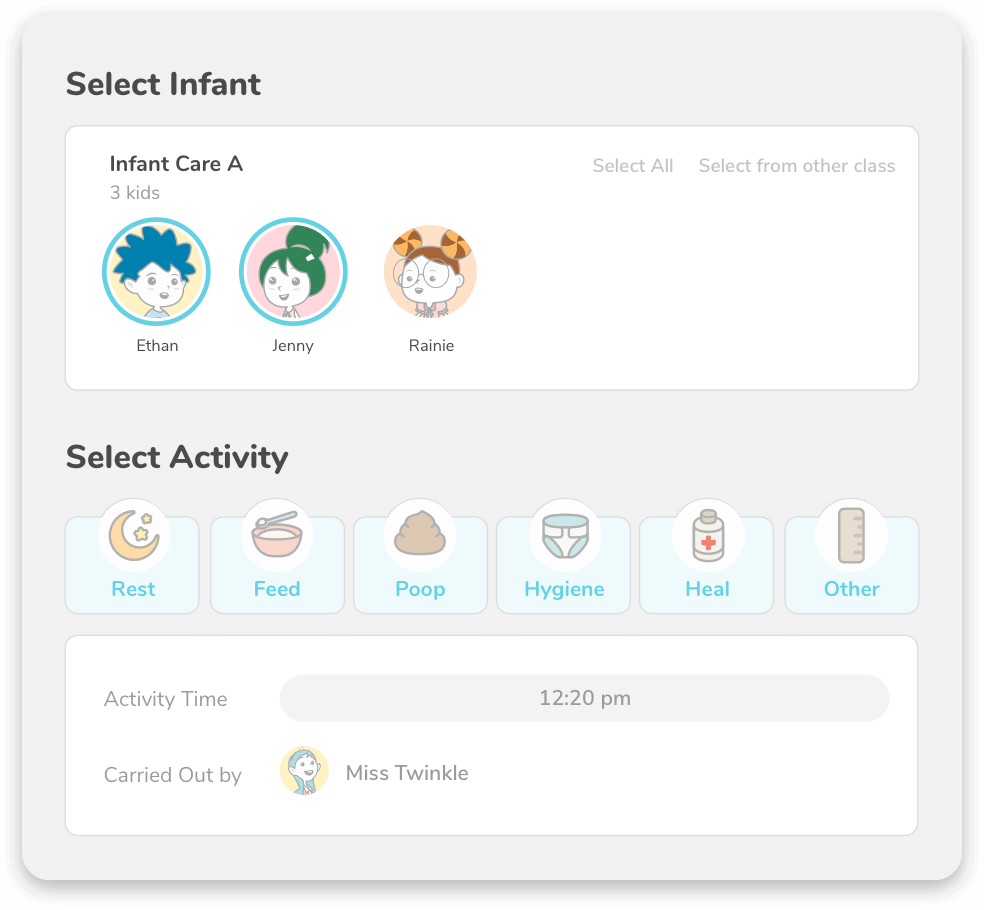
Instead of relying on memory, verbal reminders, or handwritten notes, parents and schools have a shared source of information that can be accessed whenever needed.
This visibility becomes particularly valuable when multiple caregivers are involved. Whether a child moves between classrooms, has different teachers throughout the day, or requires special care instructions, important information remains accessible and documented.
More Than record keeping
The value of health tracking is not simply about storing information. It is about helping parents feel reassured that important instructions have been received and acted upon.
When a parent submits a medication request through the app, they do not have to wonder whether a note was misplaced. When a teacher records a meal, nap, or health observation, parents receive greater visibility into their child's day. When schools maintain a consistent record of health-related information, teams can work with greater confidence and accountability.
When it comes to children's wellbeing, peace of mind often comes from knowing that important details are not dependent on memory alone. They are documented, visible, and shared with the people who need them most.
Peace of mind matters
We know. No system can replace attentive teachers, caring staff, or strong communication between schools and families. We do believe that good systems can support them to achieve the best possible outcomes.
For parents, peace of mind often comes from knowing that important information will not depend on a single conversation or someone's memory.
For schools, it comes from knowing that critical details are recorded, accessible, and easier to act upon.
When it comes to allergies, medications, and children's wellbeing, the goal is not simply to remember important information.
It is to make sure the right information reaches the right people every single time.
Helping Schools Turn Good Intentions Into Reliable Processes
Every educator wants to do the right thing for every child. The challenge is ensuring important health information doesn't get lost between conversations, notebooks, spreadsheets, and shift changes.
LittleLives helps schools centralize medication requests, allergy information, attendance records, daily care updates, and parent communication in one platform—giving staff greater visibility while providing parents with confidence and peace of mind.
Interested in learning how LittleLives can support your centre? Reach out to us at sales@littlelives.com for an exploratory discussion.




 Singapore
 Malaysia
 Vietnam
 Indonesia
